
The Simpsons has recently decided to scrap the long running Kwik-E-Mart owner Apu Nahasapeemapetilon from the show, with many labelling the character as racist.
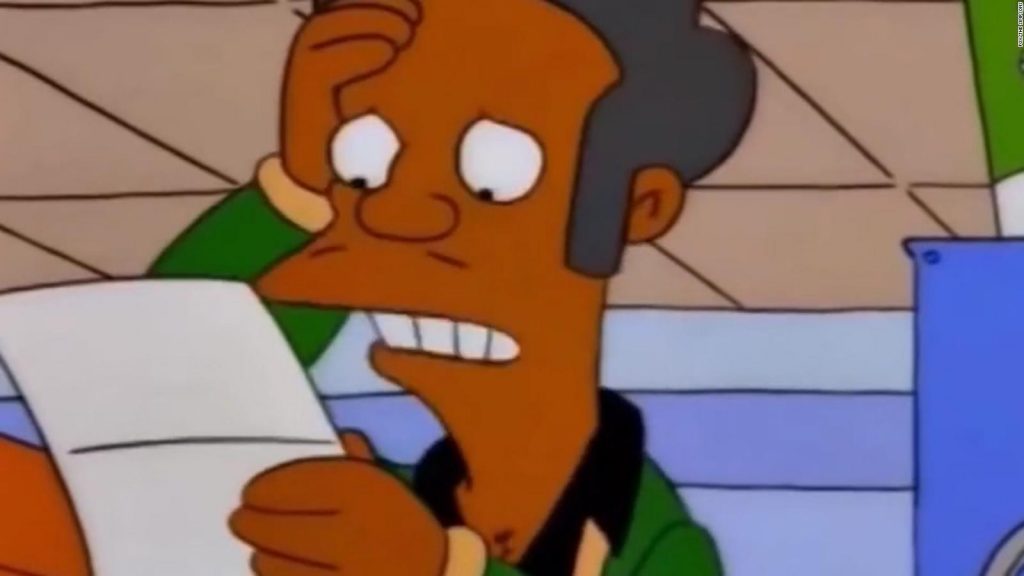
Apu, an Indian immigrant character who owns and manages a convenience store, known for his catchphrase “Thank you, come again”, is voiced by white voice actor Hank Azaria.
The Simpsons have come under fire for portraying Indian-Americans negatively and for using white actors to voice other ethnic characters.
However, this controversy has recently resurfaced following the mass protests this month over George Floyd’s murder and the killings of Black Americans by police.
Azaria, who also voices Black police officer Lou and the Mexican-American Bumblebee Man, has responded to the backlash saying he will step away from Apu, with producers confirming they will “drop the Apu character altogether.”
While it seems like a step in the right direction many still hold mixed feelings towards the decision, with Zoe Kerruish, a long running fan of the show saying:
“He has been around since the 90’s and has become such a beloved and iconic character… I think it’s good that audiences are now calling out racial stereotypes, but I can’t help but feel a little sad.”
The Simpsons have been undergoing public pressure to scrap the character for years, with controversary sparking after comedian Hari Kondabolu realised a documentary titled “The Problem with Apu” back in 2017.
It brought to light how the character was a problematic stereotype of South Asians.
Raell Monteiro agrees saying:
“As someone of Indian descent and as someone who has watched the Simpsons since I could remember, it’s disheartening to see a family favourite get away with it for so long. I love the show, but I think it’s disgusting and offensive that it has taken 30 years to address this.”
The Simpsons attempted to address the problem in 2018, making a short segment with Lisa and Marge Simpson, who read an updated version of The Princess in the Garden.
Lisa looks at the camera and says: “Something that started decades ago and was applauded and inoffensive is now politically incorrect. What can you do?”
Lisa then looks at a picture of Apu with the catchphrase “Don’t have a cow!” written on it.
“Some things will be dealt with at a later date,” Marge says.
“If at all,” Lisa responds
There was a huge outpour of negative responses who felt this only made matters worse.
Mrs Kerriush reflects how this racial ignorance is having an impact on its audience:
“I used to watch the Simpsons all the time, and it’s not until this year that I ever really dissected what I watched when I was younger… I used to not see anything wrong with Apu. I knew he was Indian and with little to no other Indian characters, as a kid I formed this subconscious idea of a race off of an outdated and offensive caricature.“
It’s safe to say people are coming to call for more television diversity and to challenge racially insensitive content
The reckoning of racism in US pop culture has only just begun.